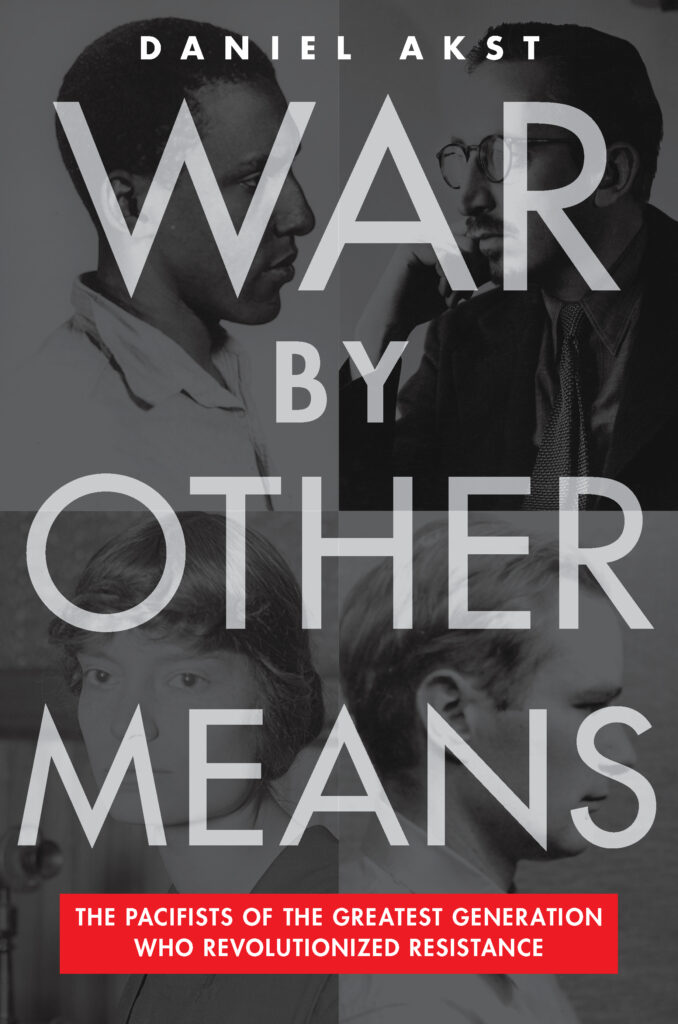
 “In this powerful, carefully researched and crisply written study Daniel Akst reevaluates figures dismissed in their own time and by history as cranks, cowards and even traitors. In doing so he has done the near impossible—creating an empathetic portrait of often despised figures and forcing us to reconsider a legacy that turns out to have shaped the generations that came afterwards in profound ways. It is a small masterpiece of revisionist history.” —Richard Aldous, professor of history and literature at Bard College; author of Schlesinger.
“The stories of the brave people in this book are a profoundly important, and unduly ignored, part of modern American history. Daniel Akst tells them with grace and scope, showing how the convictions of his characters carried them through their whole lives, and into some of the most important battles for social justice of our time.” —Adam Hochschild, author of King Leopold’s Ghost
”Akst convincingly places his protagonists in a lineage of antiauthoritarian activism that runs from Thoreau to the 1960s counterculture and beyond. This history casts the Greatest Generation in a new light.” — Publishers Weekly
”Akst writes effectively of these pacifists and objectors, noting that many of them took important roles in later resistance against war and for advances in civil rights… A worthy exploration of a little-known episode in the history of American involvement in WWII.” — Kirkus
“Daniel Akst has written an engaging and eloquent book about American pacifists in times that tried their world-views. He tells a morally complicated, compelling story that will intrigue especially anyone interested in 20th century American intellectual and political history.” —Mitchell Cohen, former co-editor of Dissent; author of The Politics of Opera
“The men and women who chose resistance, prosecution, persecution, incarceration and public scorn reshaped the pathway of the American left in ways that would bear fruit over the following decades. Pacifists fought — and it is key for Akst that they framed their struggle as a nonviolent fight — segregation, detention of Japanese Americans and civilian bombing, and ‘most of all, influenced by Gandhi, they transformed their pacifism from a philosophy of wartime refusal into an active nonviolent system for confronting and defeating injustice.’ ” —David Perry, The Washington Post
“Akst wants us to consider what it meant to take an unpopular (and often illegal) stand against arguably the last war Americans widely supported.” —Chris Vognar, Los Angeles Times
“Akst provides fascinating biographical sketches of his protagonists.” —Glen C. Altschuler, Minneapolis Star Tribune
“A terrific book. . . His narrative is lively and absorbing. He offers fascinating biographical profiles and places his protagonists in a historical context. . . I highly recommend this book to all readers interested in World War II, pacifism, nonviolence, social justice, and the US peace movement.” —Scott Bennett (author of The War Resisters League and Gandhian Nonviolence in America, 1915-1963), writing in Peace & Change, A Journal of Peace Research
“Akst is not a pacifist, but he has written a sympathetic and compelling story of pacifists’ courage and the enduring impact of their testimony.” —Jean Parvin Bordewich, Friends Journal